
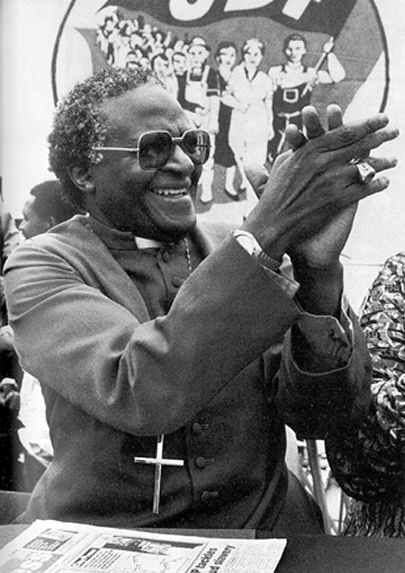
[Digital image]. (n.d.).Retrieved from http://zar.co.za/tutu.htm
Ferch (2012) writes, “When we witness the grace of a kind word, or encounter forgiveness… we witness the legacy we leave for our children” (p. 91). For Servant Leadership to be authentic, an ability and willingness to forgive must be present. I believe we are all bound by an overarching need for love and connection and that service is at the heart of living a fulfilling life. As Kevin Hall writes, “A life of significance is about serving those who need your gifts, your leadership, your purpose” (Leaders in Heels, 2015). Serving others requires love and compassion despite the evil that exists in the world. Evil can be seen through suffering, conflict, and dysfunction. It is vital that Servant-leaders recognize suffering, conflict, and dysfunction as enduring dynamics of our human existence so that they can provide life-giving and hopeful responses when those they serve are faced with adversity. Being a Servant-leader is about responding to hate with love and the current state of the world with hope, not fear. Throughout my reflection and studies in Leadership, Justice, and Forgiveness, I was able to understand my personal forgiveness-asking process. My forgiveness-asking is rooted in my belief that humans are good by nature, we are all interdependent, and we are bound by our inherent need for love.
Reyes (2004) discusses the role of dysfunction in our lives, “Many times you don’t know whom you’re dealing with because you don’t know their history… It’s all about the need to love and be loved. It’s about learning how to love and then called to step into service” (Mentor Gallery, 2004). When we think of humanity in these terms, we can develop a deeper appreciation that our humanity is bound by love. We all share the need to be loved. We are all called to serve one another and cannot authentically do so without the ultimate love: forgiveness. As Tutu (1999) writes, “We are made for togetherness, for friendship, for community, for family, we are created to live in a delicate network of interdependence” (p. 265). In these terms, forgiveness is the best form of self-interest (Tutu, 1999, p. 35). Through forgiveness, I am able to serve those around me and continuously set my sight on justice. Justice is about leaving the world better than I entered, creating a world that I would like to live in, and setting aside revenge in any situation I may encounter along the way. It isn’t always easy, in fact, it can be painful, but restorative justice will always take precedence over retribution.
For me, forgiveness is about understanding our interdependence as human beings and celebrating diversity. Embracing diversity means practicing unconditional forgiveness. Through operating under the assumption that humans are good by nature, we are all interdependent, and that we are bound by our need for love, I can fully appreciate service as the heart of living a fulfilling life. Living a fulfilling life means being open to human suffering, conflict, and dysfunction to deepen my personal forgiveness-asking process. I will choose, as Lowney (2013) writes to, “walk the world with my eyes and heart open to the joys, sufferings and everyday struggles that unfold around me, and, by doing so, strive always for an ever-deeper sense of solidarity” (p. 150). I have one life to live, why not make the conscious choice to embrace humanity with love, compassion, forgiveness, and service? The choice is mine. The choice is ours.
Food for thought:
- What is your personal forgiveness asking process?
- What does forgiveness mean to you?
- Knowing that you have one life to live, does that change your meaning of forgiveness? Why or why not?
 Imagine.Create.Serve.